

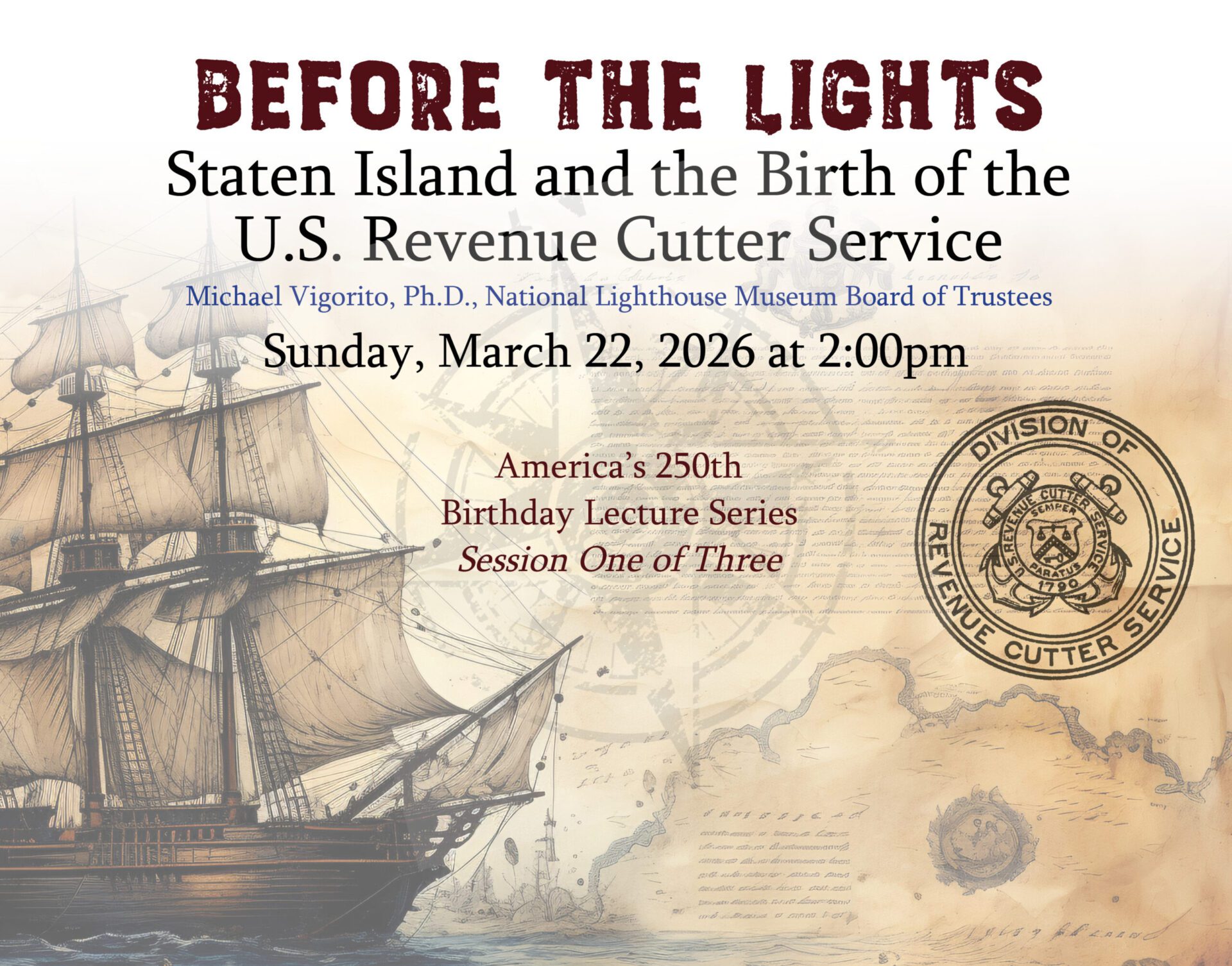
This first talk explores how Alexander Hamilton’s creation of the Revenue Marine —later known as the U.S. Revenue Cutter Service— and the work of early customs officers made Staten Island a key state and federal maritime outpost in the early republic. Focusing on an 1814 act that converted St. Andrews Church glebe at the Watering Place (present day Tompkinsville/St. George) into state and federal quarantine grounds, the talk will discuss how cutter operations, quarantine policy, and public health helped secure American commerce and shape the island’s emergence as a center of federal authority. Although intended to protect the port and the nation’s commerce from the importation of infectious disease, the 1814 act also planted the seeds for the growth of Tompkinsville ultimately fueling fear and resistance that culminated in the violent destruction of the state Quarantine Ground.
About the Speaker: Dr. Vigorito is a Professor of Psychology at Seton Hall University recently retired from his full-time position after 33 years of teaching and now serves as a part-time senior scientist in Seton Hall’s Institute of Neuroimmune Pharmacology. Dr. Vigorito is a trustee at the National Lighthouse Museum and has a long interest in the history of the place once known as the Watering Place.